
Guide
AI automation for SMEs: where it is actually worth starting
How SMEs can identify useful AI automation: processes, data, approvals and first pilots without hype.
2026-05-26 · Alpino AI · 3 min read
Not every process needs AI
AI automation sounds big quickly. In practice it usually starts small: a document is read, a quote is prepared, an email is classified or a recurring decision is supported with historical data.
For SMEs, that is the useful entry point. Not "we need an AI strategy", but: which workflow costs time every week, repeats often and still depends on context?
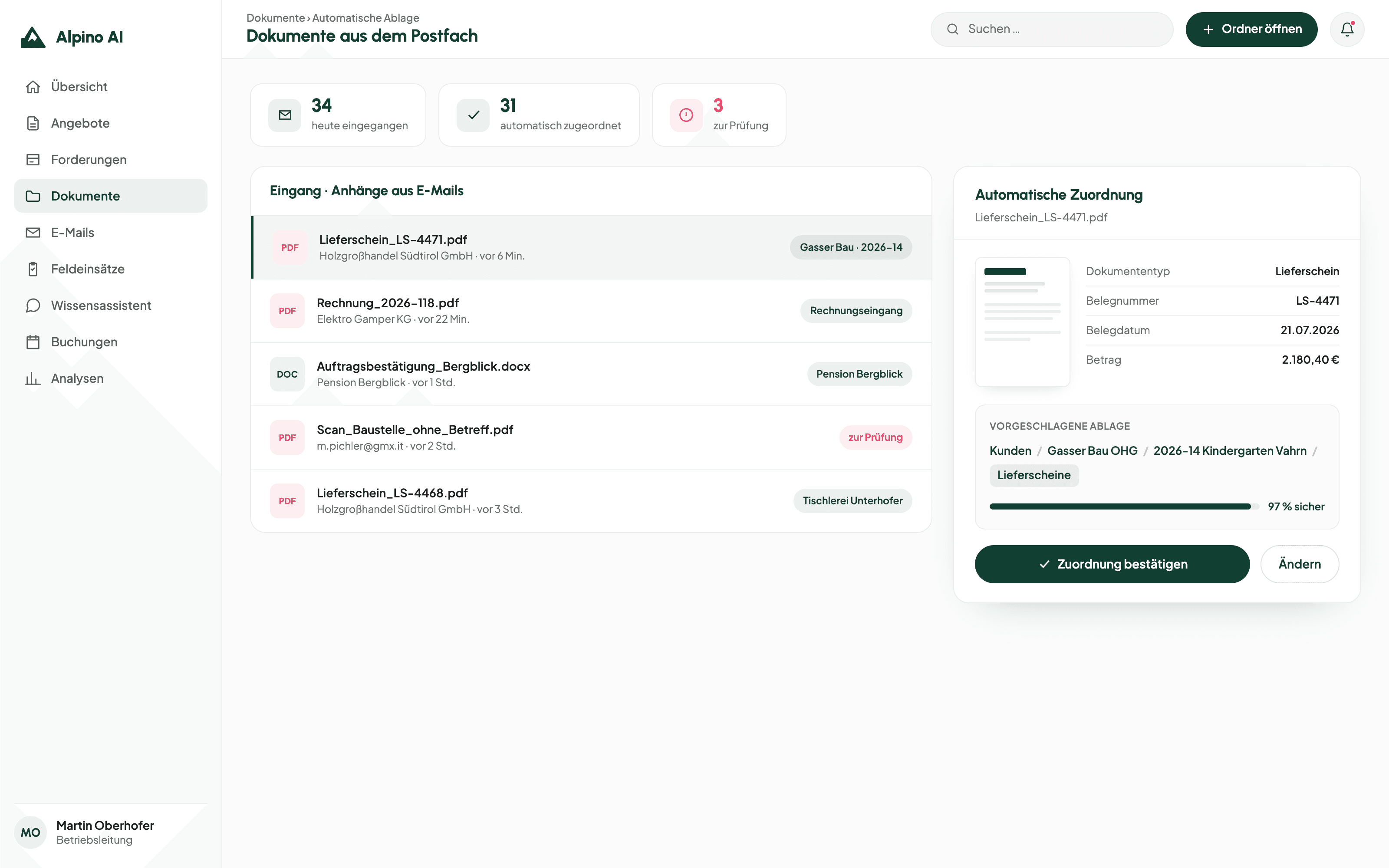
Classic automation is strong when the rules are clear. AI becomes interesting when information is unstructured: PDFs, emails, old orders, free text, images, notes or knowledge stored in folders.
Good candidates have three traits
A process is usually a good fit for AI automation when three things come together:
- It happens often enough for the time saving to matter.
- There are examples or data the solution can use for context.
- A person can review the result before anything critical happens.
The third point matters. In SMEs, AI does not need to make final decisions immediately. Often the better first step is a system that prepares 80 percent of the work and leaves approval with the team.
One example is quote automation: past orders, product data and text modules help prepare a proposal. A person checks price, wording and special cases. Time is saved without giving up control.
Where AI automation becomes tangible
Typical first projects include:
- extracting and structuring documents
- preparing quotes or reply drafts
- sorting and summarising incoming emails
- preparing reminders or follow-ups
- making internal knowledge searchable
- flagging deviations in data or processes
The common thread: the work is operational, recurring and partly manual today. That is where value appears quickly, because the solution touches daily work.
In a project such as collections automation, the goal is not to automate customer communication blindly. The goal is to detect open cases, prepare the next best step and give the team a better basis for decisions.
The first pilot should be small enough
A good AI pilot does not need to do everything. It should answer one concrete question:
Does this workflow work reliably enough with our data to justify building further?
That often takes days or a few weeks, not months. What matters is using real examples. Demo data is comfortable, but it does not answer the main question: how does the solution behave with the messy files, edge cases and wording that actually occur in the company?
That is why we usually start with a clearly scoped use case at Alpino AI. After that, it becomes much easier to decide whether it should become an internal tool, an ERP integration or a larger software product.
What should be clarified before starting
Before a pilot we typically check:
- Which data sources matter?
- Who can see or approve results?
- Which mistakes would be harmless, and which would not?
- Where should the solution appear in daily work?
- Which metric shows that the pilot is useful?
These questions are more useful than a long AI roadmap. They quickly show whether automation makes sense and how far it should go.
Conclusion
AI automation for SMEs is not most valuable where it sounds most spectacular. It is valuable where work piles up because information needs to be found, copied, compared or prepared.
The best start is one concrete process, real data and a clear approval point. Everything else can build on that.
If you want to assess a specific workflow, start with our services overview or browse the use cases.
Next step
Want to find out where AI actually makes sense for you?
We translate the article into concrete workflows: which task is worth automating, which data is needed and how small the first MVP can be.