
Case Study
Automating collections: how AI supports open receivables
How AI supports collections workflows: detect open cases, prepare next steps and keep human control.
2026-05-26 · Alpino AI · 3 min read
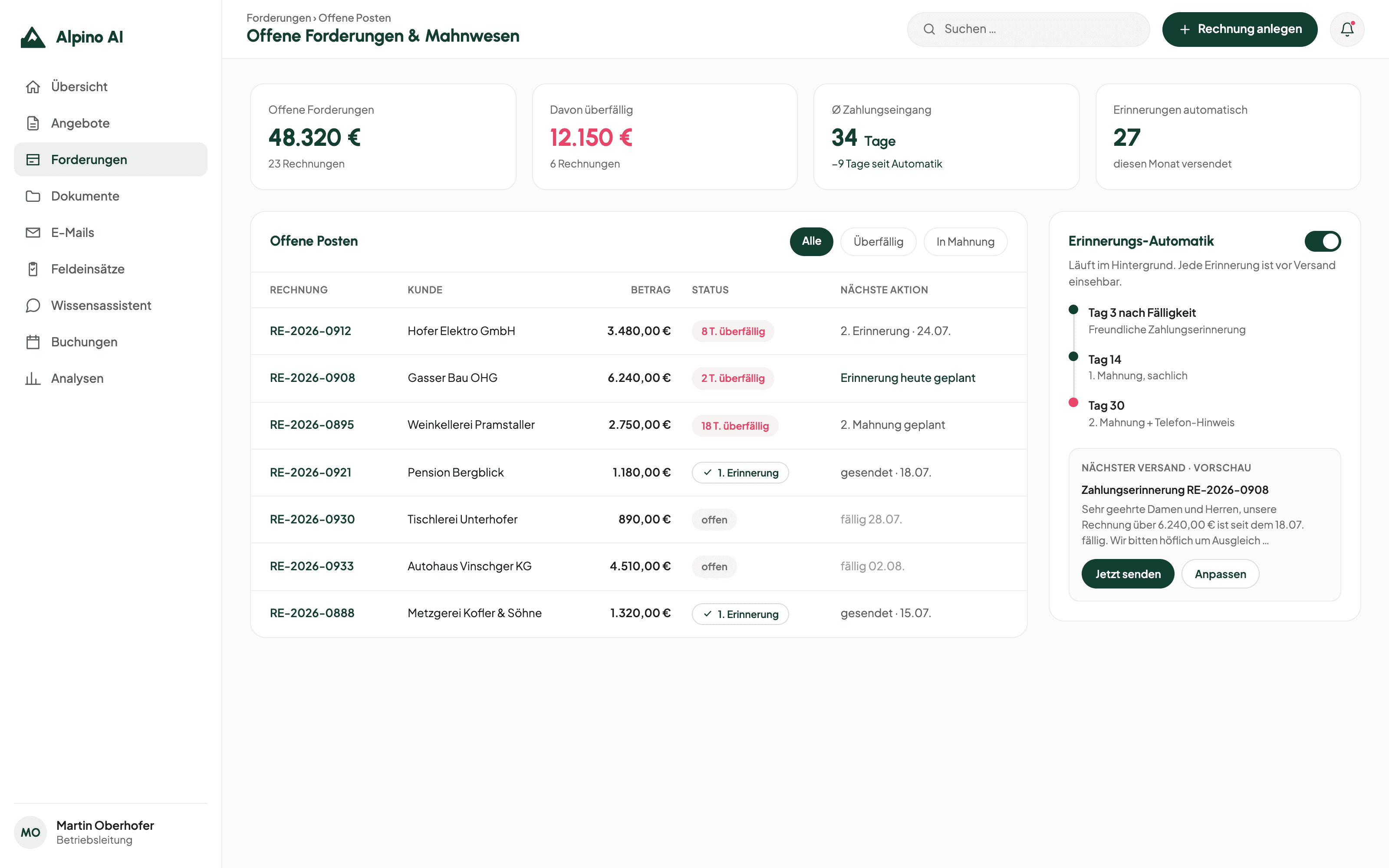
Collections are rarely complex, but often tedious
Open receivables are not a new problem. Still, collections workflows in many companies remain surprisingly manual: lists are exported, payments are checked, customer histories are searched, emails are written and exceptions are clarified internally.
That takes time. More importantly, it takes attention. Not every open invoice is the same. Some cases need a friendly reminder. Others are linked to a complaint, a missing document or an internal approval.
This is where AI can help. Not by sending standard reminders blindly, but by preparing cases better.
What a good solution should do
A useful collections automation combines several data points:
- open items from accounting or ERP
- customer history and previous communication
- due dates, amounts and priorities
- internal notes or status information
- existing text modules and tone of voice
The result does not have to be a fully automated reminder. A better first step is a work proposal: which cases are urgent, which should pause, which message fits and what needs human review?
Our collections automation use case shows this pattern: AI structures, prioritises and prepares. Decisions remain traceable.
Why AI is better than a rigid workflow here
A classic workflow can say: if an invoice is 14 days overdue, send a reminder.
That is useful, but often too rough. Real processes have exceptions:
- A customer has already replied.
- An invoice was partly paid.
- A project is not fully closed internally.
- Communication should differ by customer group.
- A case should go to sales or project management, not to the next reminder level.
AI can bring this information together and summarise it in natural language. The team sees what is going on faster and does not need to open several systems first.
Control remains important
Money and customer relationships are sensitive. Blind automation is risky. That is why AI-supported collections should work with clear approvals:
- suggestions instead of automatic escalation
- a log explaining why a case was prioritised
- text drafts that can be reviewed
- clear limits for sensitive customers or high amounts
- manual override at any time
This turns AI into decision support, not an uncontrolled risk.
What a first pilot can test
A pilot does not need to model the entire receivables process. A narrow slice is better:
- A list of open cases is imported.
- The solution groups cases by urgency and context.
- Selected cases receive draft messages or next-step suggestions.
- The team evaluates quality, time saved and error rate.
If that works, ERP integration, approvals, roles and reporting can follow.
The value is not only faster emails
The biggest benefit is often not the automatic message. It is better overview:
- fewer forgotten cases
- faster assessment of exceptions
- more consistent communication
- less manual searching across systems
- better prioritisation for the team
For many companies, this is a more realistic and more valuable start than full automation.
Conclusion
Automating collections does not mean handing the customer relationship to a machine. It means reducing recurring preparation work and giving the team better decision support.
If you want to assess whether a similar workflow is suitable in your company, start with our services overview or the concrete collections use case.
Next step
Want to find out where AI actually makes sense for you?
We translate the article into concrete workflows: which task is worth automating, which data is needed and how small the first MVP can be.